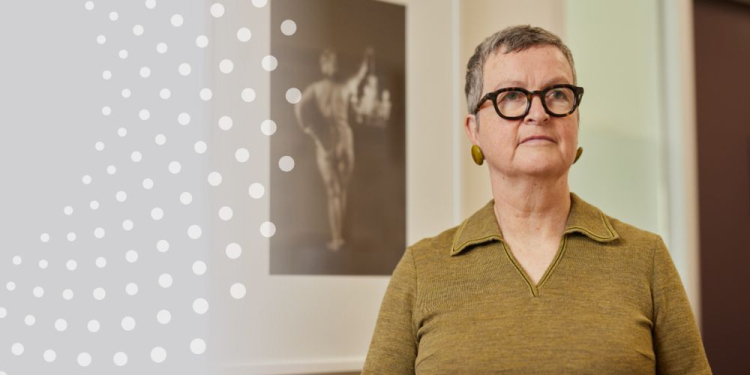
Why are women more affected by dementia than men? It's a question Professor Martha Hickey is trying to answer. Professor Hickey is the Head of Menopause Services at the Royal Women’s Hospital. She leads international research into how menopause may affect brain health and dementia risk, and what can help support brain health as women age.
"Women's experiences have historically been underrepresented in medical research," Professor Hickey says.
"We're now asking key questions about how menopause affects women's health as they age."
Why menopause?
Women are more likely than men to develop dementia, but researchers still do not fully understand why.
As scientists search for answers, menopause has emerged as an important area of study.
Many women notice changes in memory, focus and concentration during menopause, often referred to as brain fog. These symptoms are common, but researchers are still figuring out their causes. We also don’t know whether these memory and concentrations problems around menopause have implications for brain health later in life.
"Women often tell us they notice changes in memory, focus or concentration in perimenopause," Professor Hickey says.
"These experiences can be frustrating and worrying. They also raise important questions for researchers."
Searching for answers
Professor Hickey is a lead investigator for the Wellcome Leap CARE program. This USD$50M global research program aims to cut Alzheimer’s risk for women in half. She is one of only two Australian investigators funded in this international program.
The project unites researchers globally to explore why women are more affected by conditions like dementia and Alzheimer's disease. It also studies whether reproductive factors contribute.
"We want to better understand the factors that influence women's brain health as they age," Professor Hickey says.
"The more we learn, the better placed we are to support women in the future."
Alongside her research, Professor Hickey recently contributed to the World Health Organization's dementia prevention guidelines.
Her team addressed the role of menopausal hormone therapy (MHT) in prevention of dementia. They found no evidence that MHT prevents dementia, supporting international guidelines that advise against taking MHT for this indication.
"Women deserve clear, evidence-based information," she says.
"While we're learning more about the relationship between menopause and brain health, there are still important questions that need to be answered."
Looking ahead
Interest in women's brain health has grown rapidly in recent years, but many questions remain.
For Professor Hickey, that makes high-quality research more important than ever.
"Women want reliable information about what happens to their bodies and brains as they age," she says. This cannot come from surveys, it needs longitudinal studies and clinical trials.
"There is still a long way to go, but we are gradually increasing our understanding about how women’s reproductive health and brain health are connected."
Read related content from the Women's
-
 The Women’s to co-lead global menopause study on women’s heart health
A million-dollar global research project co-led by Australia and the UK is taking a key step towards closing the gender gap in heart disease.
Learn more -
 New Women’s-led project to guide menopause treatment decisions
Women will soon have clearer support to navigate menopause. The Women’s is leading new research to create a trusted online tool for those thinking about Menopause Hormone Therapy (MHT).
Learn more -
 The untold story of sex, sleep and sanity after surgical menopause
A new study from the Royal Women’s Hospital shows that women who have surgery to lower their ovarian cancer risk often experience sudden changes linked to early menopause.
Learn more