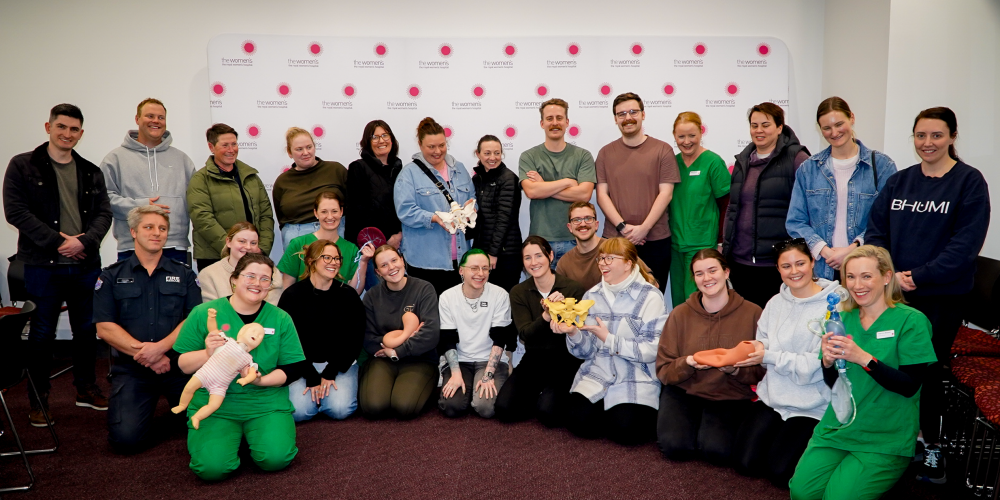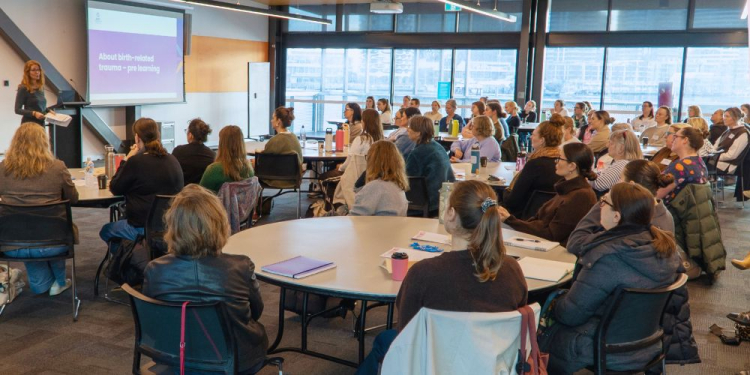
More than 50 maternity educators from across Victoria have come together for a conference that marks the first time the state’s maternity education network has convened to focus on birth trauma.
The two-day event, organised by the Maternity Services Education Program (MSEP) at the Women’s, brought together 55 educators from more than 30 health services, spanning metropolitan, regional and rural hospitals.
Attendees travelled from across the state, from Mildura to Gippsland, the Grampians and the northeast, highlighting a central challenge in maternity care: ensuring women receive the same standard of care no matter where they live.
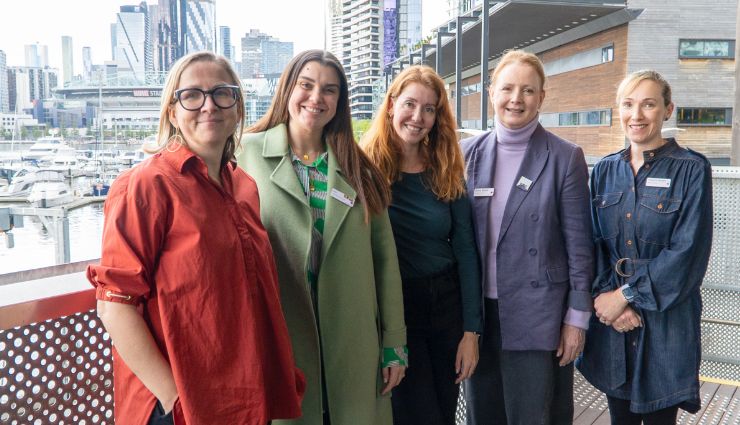 Bree Bulle (2nd on the right) is a Clinical Midwife Consultant and heads MSEP. She said the conference aimed to help educators understand care models for women facing birth trauma. It also focused on delivering consistent care across Victoria. The goal was to help others recognise the signs, understand the risks, and know when to seek help.
“This is the first time we’ve brought maternity educators together in this way to focus on birth trauma,” Ms Bulle said. “We know there can be variation in practice, and educators play a critical role in addressing that. By strengthening their knowledge and skills, we can support more consistent care across the state.”
Birth trauma was a key focus, with Amy Dawes from Birth Trauma Australia outlining both the scale of the issue and its causes.
“Birth trauma is real, personal and often invisible,” Ms Dawes said.
She told delegates that one in three women experience birth trauma, and that it is often linked not to clinical complications, but to how care is delivered.
“Women feel traumatised when they feel unheard, when they lose control, or when they don’t feel properly informed,” Ms Dawes said.
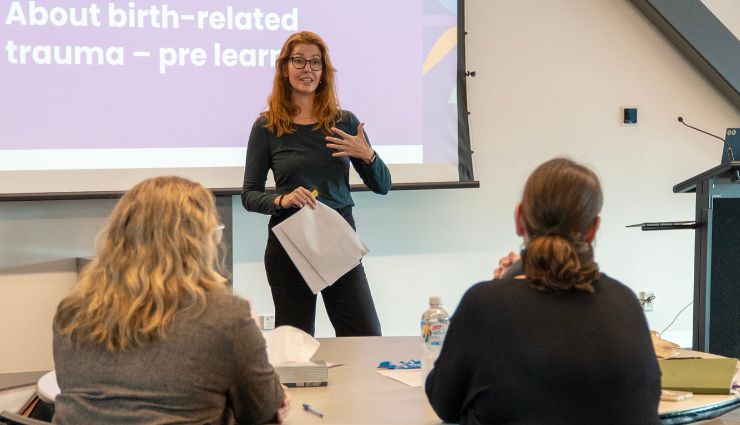 Drawing on national survey data, Ms Dawes said most trauma described by women was preventable, with communication gaps, lack of informed consent and pressure during key decisions among the most common contributors.
“Birth is unpredictable,” Ms Dawes said. “But how we support women through that unpredictability makes all the difference.”
She also warned that antenatal education often fails to prepare parents for the reality of birth.
“We are not preparing people for variation,” Ms Dawes said. “Women can't make genuinely informed decisions about what happens in their birth if they haven't had the opportunity to understand their options long before that moment arrives – this process can begin with antenatal education.”
At the Women’s, the Birth Reflections Team is working to respond to trauma after birth, offering women structured opportunities to revisit and understand their experience.
The service is led by experienced midwives who step away from clinical roles to provide time for women to talk through their birth, ask questions and make sense of what happened.
“Only the woman can define what was traumatic,” the team emphasised.
Since launching through the hospital’s Late Career Program, the team has identified communication as the most common factor in birth trauma.
“It’s not only what we say, but also what we leave unsaid,” one midwife said. “The way we communicate shapes how care is received.”
Women often describe feeling rushed, uninformed or excluded from decisions, with the team noting that even small oversights can have lasting emotional impact.
“Even small things can have a lasting impact,” they said.
A/Prof Julia Unterscheider, Director of Birth Centre at the Women’s, told delegates that health services must strengthen how they respond to these experiences.
“We need systems that are open, transparent and focused on improvement, not blame,” A/Prof Unterscheider said.
Across the program, a consistent message emerged: small interactions matter.
Speakers highlighted that even brief moments of empathy, clear explanation or reassurance can shape how a birth is remembered… sometimes in just seconds.
Sessions also explored culturally responsive care, including the importance of recognising Aboriginal cultural practices and supporting Aboriginal and Torres Strait Islander families in ways that are respectful and appropriate.
Other sessions covered trauma-informed antenatal education, perinatal bereavement care and the impact of trauma on clinicians, reinforcing that experience, not outcome alone, defines quality care.
The Maternity Services Education Program (MSEP) is a statewide initiative that supports maternity clinicians through education, training and workforce development, with a focus on building capability among clinical educators to drive consistent practice across Victoria’s health services.
Learn more about MSEP here: The Women's Maternity Services Education Program (MSEP) | The Royal Women's Hospital